Bookstore
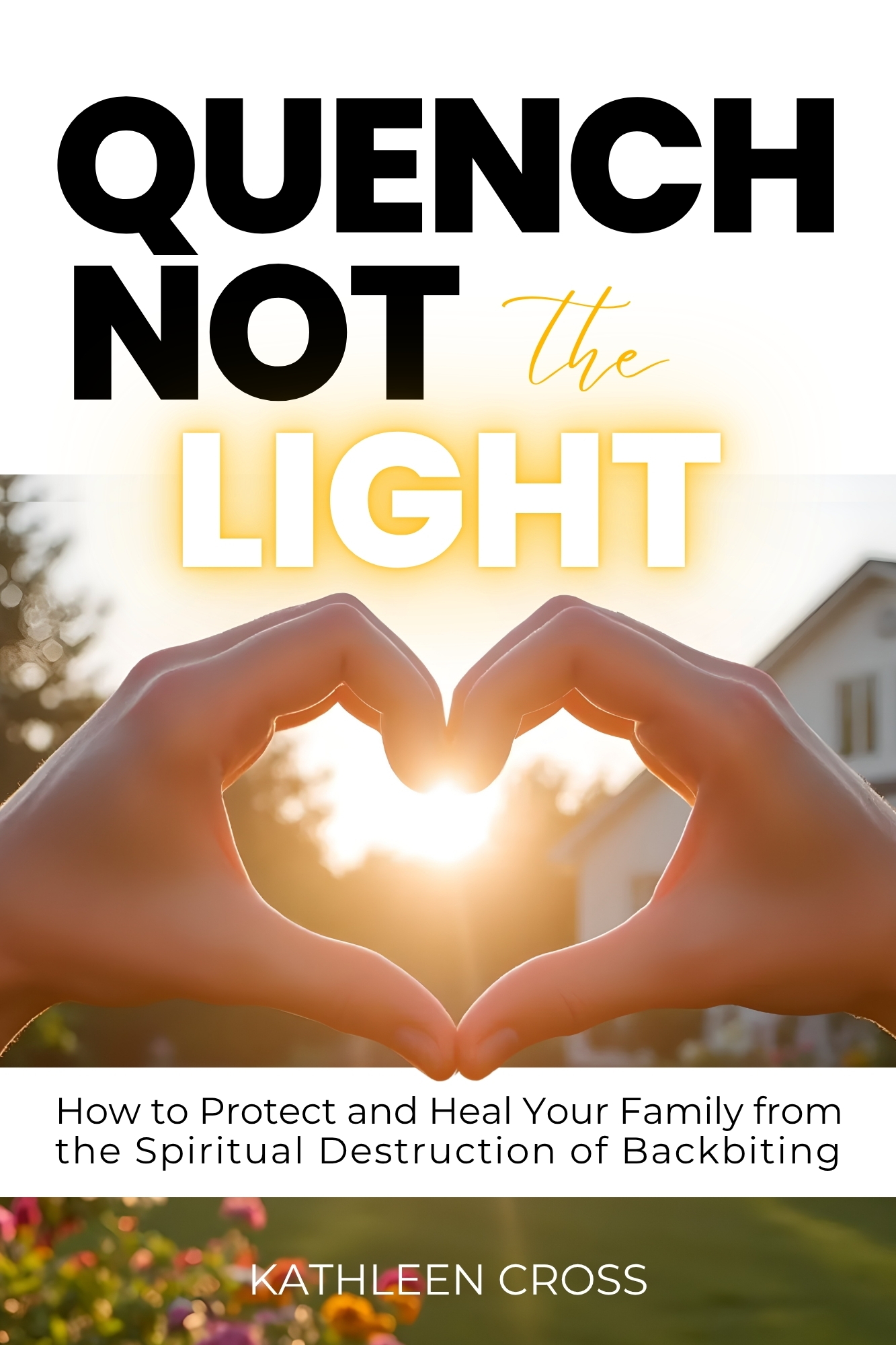
Quench Not the Light: How to Protect and Heal Your Family from the Spiritual Destruction of Backbiting
by Kathleen Cross
This spiritually and scientifically informed book empowers families to break free and heal from the destructive habit of backbiting—one of the most corrosive forces in human relationships.
Drawing on insights from the Bahá’í Writings, modern psychology, and neuroscience, Quench Not the Light offers practical tools, reflections, and activities to help families recognize and replace harmful speech with habits of compassion, honesty, and grace.
Through soul-searching prompts, family pledges, role-playing games, and daily practices like the “Sacred Speech Journal,” readers are invited to create a home culture rooted in respect, kindness and spiritual accountability.
Whether your family has unknowingly normalized gossip or you are simply seeking ways to uplift communication, this book is a compassionate, transformative guide to healing the tongue—and the heart. -$14.99
Read the introduction to Quench Not the Light
Introduction
A dear friend of mine once lived in a large house on a main road connecting her small community to the highway. Her neighbors used the road daily, rarely obeying the 25 mile per hour limit.
After her little son learned to walk, she began worrying that one of the doors to their home might be left unlocked, and he might wander out onto that road.
One early morning, she walked her child out to the edge of their yard. Holding his hand tight, she said, “My son, you must promise me you will never step onto that road unless you are holding my hand.”
He didn’t understand. The empty road seemed a perfect place to play. He looked up at his mother with wide, innocent eyes and asked, “Why?”
If there was ever a because I said so moment for a parent, this was it. Instead, she paused a moment, searching for a way to help her child understand the danger. She found it on the cement path beneath their feet—a crushed caterpillar.
“Do you see that bug?” she asked, pointing to the dead caterpillar.
The boy, who already knew about caterpillars and the colorful butterflies they were meant to become, squatted down to study the grotesque remains. “Can it still become a butterfly, Mama? Even though it’s squished?”
My friend knelt down beside him. “No, son. It can’t grow into a butterfly. The chance for it to become what it was meant to be is gone forever.”
Her son’s eyes filled with tears. “I don’t ever want to be squished like a bug, Mama,” he whispered.
His mother hugged him close. “That’s why you must never cross the road alone. Even if it looks safe, even if you don’t see any cars, danger could come in an instant. If you don’t want to be squished like that bug, you must stay off of that road. Stay here, safe in our yard.”
The powerful image of the squished caterpillar remained in her son’s memory throughout his childhood, vivid and unforgettable—a symbol of what could happen in a careless or disobedient moment.
Not only did he never try to cross that road alone, he taught the “squished bug” story to every child who visited their home, so that they would be safe too.

When I began researching to write this book, I found that I was extremely unsettled by the harsh and vivid language Bahá’u’lláh, ‘Abdu’l-Bahá, and Shoghi Effendi use to warn us against backbiting. Words like devour, extinguish, accursed, hateful, worst, foul—not delivered as soft, lovely metaphors, but as powerful, dramatic alarms.
I felt especially distressed by Bahá’u’lláh’s warning:
“…the fire of the tongue devoureth both heart and soul.”
Closing my eyes, I quieted my mind to meditate on why I found these words of Bahá’u’lláh so unsettling. The harsh language feels so absolute.
I found myself silently asking, is a permanent, irreversible destruction of the heart and soul backbiting’s eternal price?
I then remembered that story of the “squished bug”—a disturbing tale of a butterfly that will never be, but also a harsh, life-saving metaphor offered with pure love to prevent the horrible consequences carelessness could bring.
Yes, Bahá’u’lláh does use strong, urgent language to warn us about the spiritual dangers of backbiting. And we need it.
We’d like to believe our negative words about others do little harm—a frustrated complaint about a coworker, criticisms shared about an annoying neighbor, or anger at a family member’s repeated mistakes. But according to the very stern words of the Central Figures of our Faith, our backbiting is the very opposite of harmless.
Our fault finding puts us in grave spiritual danger and, in the words of ‘Abdu’l-Bahá, is:
“…the most hateful characteristic of man.”
Within the pages of this book, as we explore how and why backbiting happens in our families—
- We’ll revisit the stern warnings against backbiting from the Baha’i Writings, and dive deeper into their meaning.
- We’ll learn about the chemical cocktail released in the body when we engage in backbiting—and why it makes gossip so addictive and so difficult to quit.
- We’ll discover the actual, almost magical, power Bahá’u’lláh says each word we utter wields in this world.
- We’ll explore ways to lovingly redirect negative conversations, and how to recognize when negative truths about a person must be spoken to protect others.
- We’ll discover ways we might repair the harm of the backbiting we’ve already done, and
- We’ll learn how we can raise up a new generation of children who will prioritize the avoidance of backbiting as an intentional way of life—and pass that intention on to their own children.
Finally, at the core of this book, and at the core of this author’s purpose in writing it, is this loving message from Bahá’u’lláh:
“…the tongue is for mentioning what is good, defile it not with unseemly talk. God hath forgiven what is past.”
And there it is! There is the hopeful message my distressed heart was seeking. To whatever degree we have engaged in backbiting, those actions are past and are forgiven.
Unlike the crushed caterpillar who will never fly, the spiritual condition of our hearts, our homes and our communities can still be protected, healed and transformed—starting right now.
Let’s begin today, word by word, to fill our homes and our hearts with light and life!
Suggested Reading
The Hidden Messages in Water
by Dr. Masaru Emoto

Also by Kathleen Cross
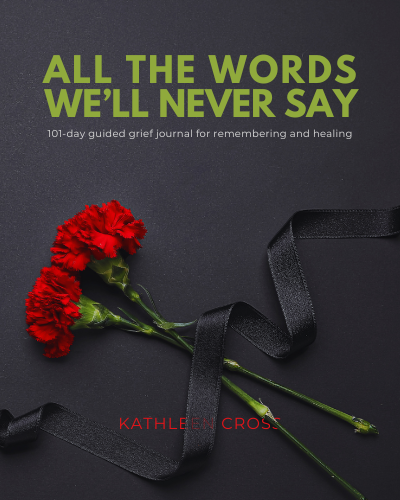
All the Words We’ll Never Say: A 101-day guided grief journal for remembering and healing.
This carefully curated journal serves as an insightful companion, with guided prompts to help you record and honor the memories of your loved one, express your unique grief experience, forge a path to healing, and create a priceless keepsake—a lasting record of the memories, insights, dreams and experiences of your love and loss.
Within these pages, you’ll find 101 days of inspiring quotes and thought-provoking prompts to guide you through the complex emotions that accompany loss. Each page provides a safe space to explore and honor your memories and feelings—empowering you to express what often goes unspoken in the grieving process.
All the Words We’ll Never Say includes:
- Daily Quotes of encouragement, healing, and inspiration
- Daily Journal Prompts to help you reflect and process
- Letter-Writing Prompts to express unspoken words to your loved one
- A Record of Your Dreams and Memories
Whether you’re at the beginning of your grief journey or have been traveling this path for some time, All the Words We’ll Never Say offers insight, solace, and support.
Join our Mailing list.
Our newsletter goes out once per Baha’i month (19 days). You will not be bombarded with emails.
We will never sell your data.